PM2.5 in Hong KONG
Chemical composition
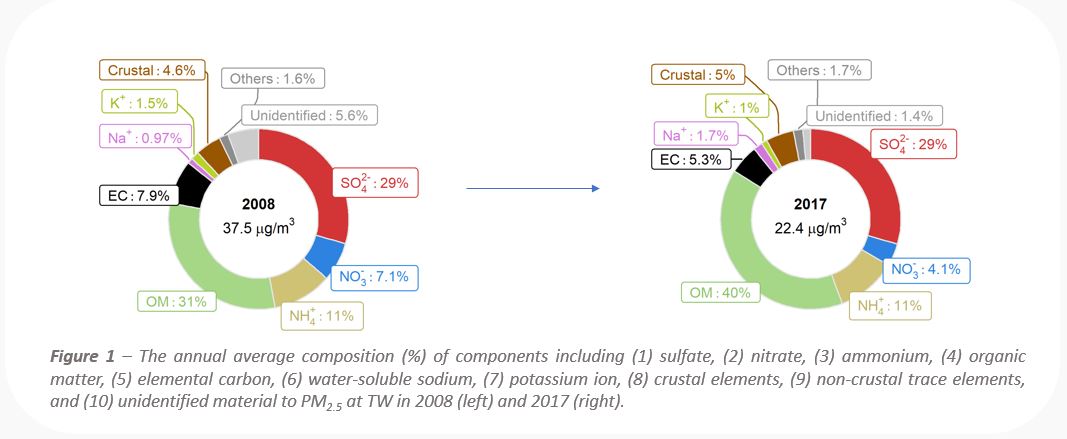
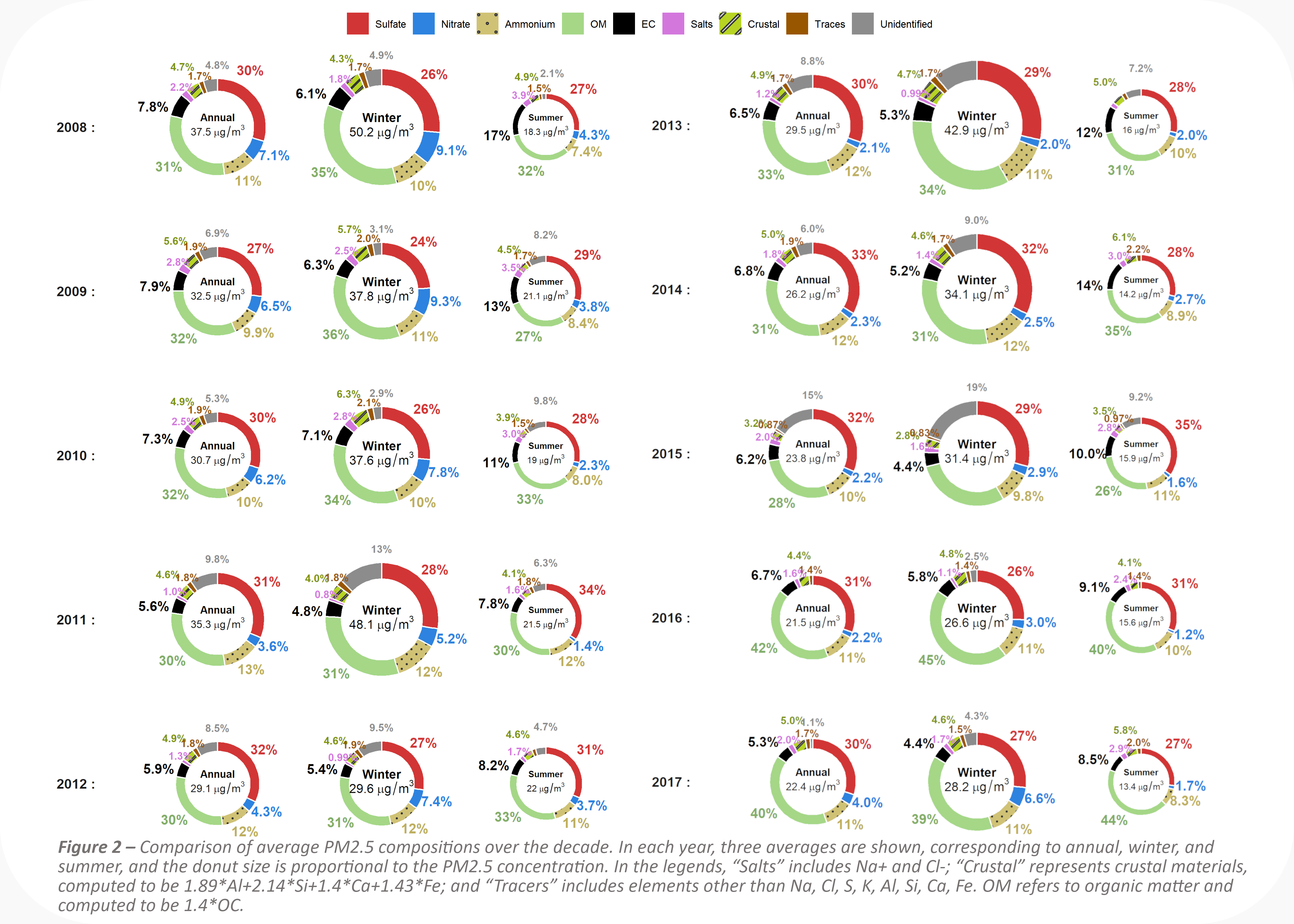
In TW, the annual PM2.5 was found successfully reduced by 15.1 μg/m3 in 10 years (2008: 37.5 μg/m3; 2017: 22.4 μg/m3) (Figure 1 & 2). Sulfate, nitrate, and ammonium ions were the major components in which the contribution of nitrate dropped from 7.1% to 4.1%. Another material accounted for the substantial part of PM2.5 was organic matter (assume as 1.4 times of organic carbon) with 31% in 2008 and 40% in 2017, respectively. While elemental carbon (EC) that particularly emitted from fuel combustions was less contributed in 2017 (5.3%), comparing with that in 2008 (7.9%). The remaining portion, distributed by sodium ions, potassium ions, crustal materials, and other tracing materials, was slightly varied over years.
_v5.JPG)
Owing to the meteorological variations such as air mass changes by the shift of monsoon in each season, favorable degradation in the warm season, and more wet deposition in the rainy season, PM2.5 levels varied seasonally as shown in Figure 3. During summer, the clean oceanic air carried by prevailed marine monsoon and the rise in the decomposition of species retained PM2.5 in low concentration. Overall, PM2.5 decline in all seasons thanks to the rigorous and successful policies of abatements on emissions by the Hong Kong government. Notably, there was elevated PM2.5 from 2010 winter to 2011 spring. Less rainfall in the same period possibly compressed the wet deposition and led to a higher PM2.5 level.
Source apportionment
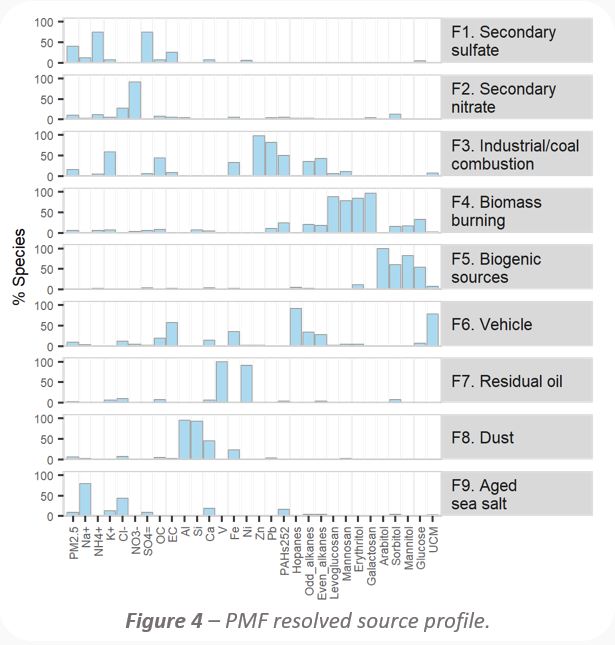
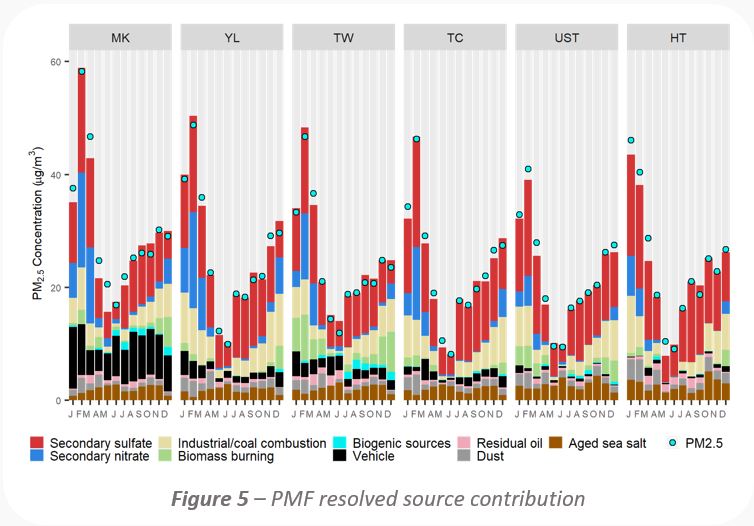
To further explore the emission sources of PM2.5, positive matrix factorization (PMF), a useful method able to separate the chemical composition data into source profile and source contribution, was used in our studies. In the PMF results (Figure 4), multiple source factors are identified by the higher loading of source-specific tracers (e.g., SO42- for secondary formed sulfate, Hopanes(&Unresolved complex mixture, UCM) for vehicular emission, Levoglucosan/Mannosan for biomass burning, etc.). Typically, secondary formed sulfate and secondary formed nitrate are the top two contributors to bulk PM2.5 in Hong Kong (Figure 5). Sources that are generated from regions outside Hong Kong and transported via air circulation/prevailing winds in monsoon particularly presents a higher-in-winter contribution while the locally emitted sources such as vehicular emissions will show a clear spatial variation (e.g. higher at roadside MongKok MK, lower at suburban sites Hoktsui HT/ our HKUST supersite UST). Knowing the characteristics and temporal variation of these PM2.5 sources by the PMF analysis would serve as valuable and referential examples and facilitate the assessments and formulations of control measures.